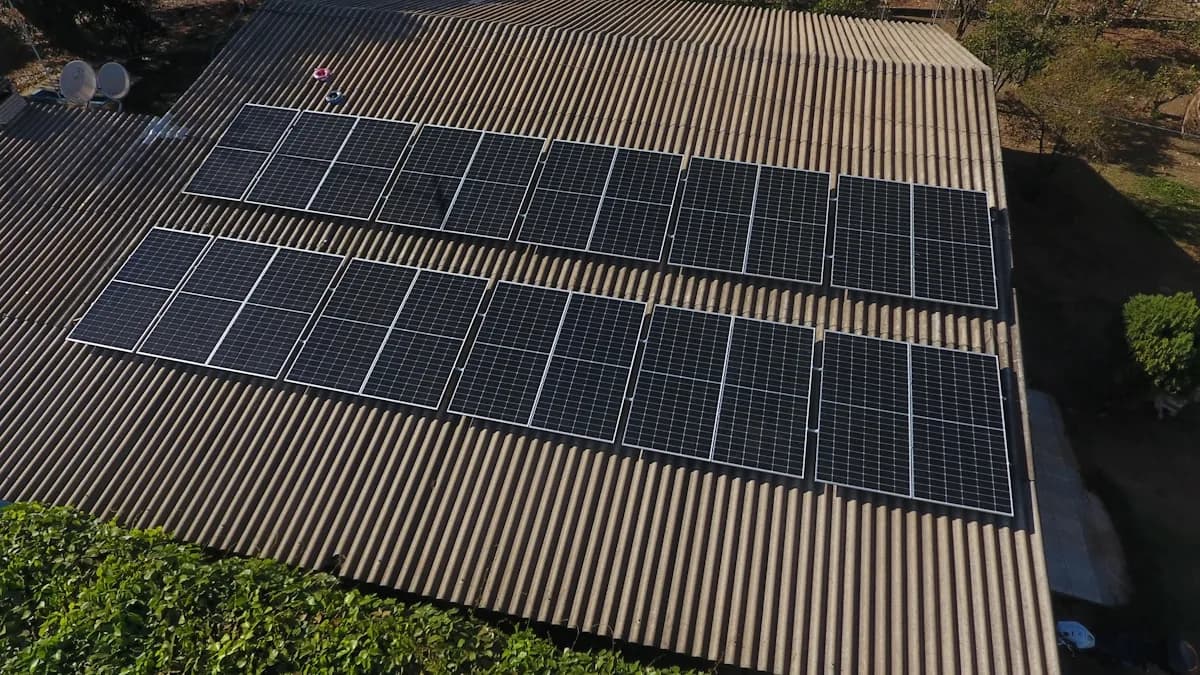
If you are considering rooftop solar anywhere in Andhra Pradesh — whether you live in Nellore, commute through Tirupati, run a business in Kadapa, or own property in coastal Ongole — understanding net metering is the single most important step before you sign an installation contract. Net metering is the mechanism that turns your rooftop solar panels from a simple electricity generator into a long-term financial asset. Without it, excess power produced during sunny afternoons would simply go to waste. With it, every surplus unit you export to the APSPDCL grid is credited back to your account, dramatically reducing your monthly electricity bill and shortening your return on investment to as little as 40–55 months.
At ELRIX ENERGY, headquartered in Nellore and serving all four districts across Andhra Pradesh's Rayalaseema and coastal belt, we handle the entire net metering application on your behalf — from DISCOM portal registration to final bi-directional meter installation. This guide explains exactly how net metering works under APSPDCL in 2026, what documents you need, how billing credits are calculated, and what timelines you should realistically expect.
What Is Net Metering and Why Does It Matter?
Net metering is a billing arrangement between a rooftop solar owner and the local electricity distribution company — in Andhra Pradesh, that is APSPDCL (Andhra Pradesh Southern Power Distribution Company Limited) for most of our service areas including Nellore, Tirupati, Kadapa, and Ongole. Under net metering, a special bi-directional meter is installed at your premises. This meter records both the electricity you consume from the grid and the electricity your solar panels export back to the grid.
At the end of each billing cycle, APSPDCL calculates your net consumption: total units imported minus total units exported. You only pay for the net difference. If you export more than you import in a given month — common during peak summer in Nellore when air conditioning loads are high but solar generation is also at its maximum — the surplus is carried forward as a credit to the next billing period.
Without net metering, a grid-tied solar system would be forced to shut down whenever it produces more power than your home immediately consumes — a condition called "export limitation." This would waste a significant portion of your system's daily generation potential. Net metering eliminates this waste entirely, which is why it is the foundation of every cost-effective residential solar installation in Andhra Pradesh.
For a typical 3 kW system in Nellore generating approximately 360–400 units per month, and with APSPDCL retail tariffs ranging from ₹6–₹8 per unit, net metering credits can save ₹2,500–₹3,200 every month. Over a 25-year system lifespan, that translates to savings well exceeding ₹9 lakh — on a net system cost of just ₹1,22,000 after the PM Surya Ghar subsidy.
How APSPDCL Net Metering Works in 2026
Andhra Pradesh follows the central government's net metering regulations as notified by the Ministry of Power, adapted through state-level orders issued by APERC (Andhra Pradesh Electricity Regulatory Commission). As of 2026, the key parameters for rooftop solar net metering under APSPDCL are as follows:
- Eligible system capacity: Rooftop solar systems up to 500 kW (or 100% of contracted load, whichever is lower) qualify for net metering in the domestic and commercial categories.
- Metering type: A bi-directional energy meter (also called an import-export meter) replaces or works alongside your existing consumer meter.
- Billing cycle: Net billing is calculated monthly. Surplus export credits roll forward for up to 12 months under current APERC guidelines.
- Settlement rate: Exported units are credited at the applicable retail tariff rate for your consumer category — not at a discounted wholesale rate. This is highly favourable for residential consumers.
- Grid connectivity: Your system must comply with APSPDCL technical standards including anti-islanding protection, which automatically disconnects your inverter during grid outages to protect linesmen.
APSPDCL operates separate division offices across Nellore, Tirupati, Kadapa, and Ongole. While the central policy is uniform, local division engineers may have slightly different document requirements or inspection schedules. This is one reason why choosing a local EPC like ELRIX ENERGY — who already has established relationships with APSPDCL field officers in these districts — significantly reduces approval delays compared to out-of-state installers who treat Andhra Pradesh as an afterthought.
The state government has also integrated net metering applications with the PM Surya Ghar Muft Bijli Yojana portal, meaning subsidy approval and net metering approval can often proceed in parallel rather than sequentially. Learn more about subsidy tiers on our dedicated PM Surya Ghar subsidy page.
Step-by-Step Net Metering Application Process
Applying for net metering through APSPDCL involves several distinct stages. When you install with ELRIX ENERGY, we manage every step below on your behalf at no additional charge beyond the standard application fee.
- Site survey and load assessment: Our engineer visits your property in Nellore, Tirupati, Kadapa, or Ongole to assess roof suitability, measure available shadow-free area, and verify your existing sanctioned load from the electricity bill.
- System design and DPR submission: We prepare a Detailed Project Report (DPR) specifying panel make, inverter rating, mounting structure type, and single-line diagram compliant with APSPDCL standards.
- Online application on APSPDCL portal: Registration on the APSPDCL consumer solar portal with your service connection number, Aadhaar, and property documents.
- Technical feasibility approval: APSPDCL division office reviews the application and confirms grid capacity availability at your feeder level. Typical turnaround: 7–15 working days.
- Installation and commissioning: ELRIX ENERGY installs the complete system — panels, inverter, mounting, wiring, and earthing — following ALMM-listed component requirements for subsidy eligibility.
- DISCOM inspection: APSPDCL field engineer inspects the installation for safety compliance, verifies anti-islanding functionality, and checks earthing resistance.
- Bi-directional meter installation: APSPDCL installs or configures the net meter. Your system is officially synchronized with the grid.
- Generation certificate and go-live: Final approval letter issued. Your system begins exporting surplus power and earning bill credits immediately.
Total timeline from application to go-live in Nellore and Tirupati typically ranges from 30 to 45 days, depending on APSPDCL division workload. Kadapa and Ongole may occasionally take slightly longer due to lower staffing at rural division offices — another reason local EPC expertise matters.
Documents Required for Net Metering in AP
APSPDCL requires the following documents for a standard residential net metering application. ELRIX ENERGY collects and verifies all of these during our initial consultation so nothing delays your approval:
- Latest electricity bill showing service connection number and sanctioned load
- Aadhaar card of the property owner (consumer name must match)
- Property ownership proof — sale deed, tax receipt, or municipal assessment record
- Structural stability certificate for rooftop load (provided by ELRIX ENERGY after site survey)
- Single-line electrical diagram and system layout drawing (prepared by ELRIX ENERGY)
- ALMM certificate copies for panels and inverter (included in our EPC package)
- PM Surya Ghar registration number (if applying for central subsidy simultaneously)
- Passport-size photograph and cancelled cheque for subsidy disbursement (if applicable)
For commercial and industrial consumers in Kadapa and Nellore industrial areas, additional documents include partnership deed or company incorporation certificate, GST registration, and a load extension letter if the proposed solar capacity exceeds current sanctioned load. Our commercial solar team handles these requirements routinely for factories, cold storages, and retail chains.
Understanding Your Net Metering Bill
Once your bi-directional meter is active, your APSPDCL bill will show several new line items that can initially seem confusing. Here is how to read them:
| Bill Line Item | Meaning |
|---|---|
| Import (Consumption) kWh | Total units drawn from the APSPDCL grid during the billing month — typically at night and on cloudy days when solar output is low. |
| Export (Generation) kWh | Total units your solar system sent back to the grid — typically during midday when household load is lower than solar output. |
| Net kWh | Import minus Export. This is the figure you are billed on. |
| Carried Forward Credit | Surplus export from previous months that offsets current month consumption. |
| Energy Charges | Applied only on net positive consumption at your slab rate (₹6–₹8/unit for most residential consumers in AP). |
Consider a Nellore homeowner with a 3 kW system during a typical April billing cycle: solar generation ≈ 390 units, household consumption ≈ 320 units, export to grid ≈ 140 units (midday surplus), import from grid ≈ 70 units (evening and early morning). Net consumption = 70 − 140 = −70 units. The 70-unit surplus carries forward to May, offsetting future imports. At ₹7/unit, that is ₹490 in credited value — compounding month after month.
Fixed charges (demand charges for HT consumers, minimum charges for LT consumers) still apply regardless of net generation. However, for standard LT residential connections in Tirupati and Ongole, fixed charges are modest — typically ₹50–₹120 per month — and are easily offset by solar savings within the first billing cycle.
Net Metering vs Gross Metering: Know the Difference
Andhra Pradesh also offers a gross metering option, primarily designed for large commercial installations and solar farms where the generator sells all output directly to the DISCOM at a fixed feed-in tariff. Under gross metering, 100% of your solar generation is exported to the grid and you buy 100% of your consumption separately — two independent transactions.
For residential and small commercial rooftop systems, net metering is almost always the superior choice in Andhra Pradesh because:
- Net metering credits exports at retail tariff rates (₹6–₹8/unit), while gross metering feed-in tariffs are typically lower (₹3–₹4/unit).
- Net metering allows self-consumption first — your home uses solar power directly before any export occurs, avoiding transmission losses and maximizing value.
- Net metering requires only one bi-directional meter, reducing hardware and maintenance costs.
- Combined with PM Surya Ghar subsidy (₹30,000 for 1 kW, ₹60,000 for 2 kW, ₹78,000 cap for 3 kW+), net-metered residential systems in Kadapa and Nellore achieve payback in 40–55 months.
ELRIX ENERGY always recommends net metering for systems under 10 kW unless a specific commercial tax or wheeling arrangement makes gross metering advantageous — a scenario our engineers evaluate during the free consultation.
Common Net Metering Challenges and How ELRIX ENERGY Solves Them
While APSPDCL has streamlined its solar approval process significantly since 2023, homeowners and businesses still encounter recurring obstacles. Here are the most common issues we resolve for clients across our four service districts:
Delayed feasibility approval: Rural feeders in parts of Kadapa and Prakasam district occasionally show "grid capacity unavailable" on the portal despite adequate infrastructure. Our team escalates through division-level contacts and provides supplementary load flow data to unblock applications.
Meter installation backlog: Bi-directional meter stock shortages at APSPDCL division stores can delay go-live by 2–3 weeks after inspection approval. We track meter allocation status weekly and coordinate with division engineers to prioritize completed installations.
Name mismatch on documents: Property registered in a family member's name while the electricity connection is in another name causes automatic rejection. We identify these mismatches during document review before submission, saving weeks of rework.
Non-ALMM components: Installers using non-ALMM-listed panels or inverters face subsidy rejection and net metering delays. Every ELRIX ENERGY installation uses fully ALMM-compliant Tier-1 components, documented with serial numbers submitted to APSPDCL.
Structural concerns on older buildings: Pre-1990 construction in old Nellore town and Tirupati temple vicinity sometimes raises structural load concerns. Our civil engineer provides stamped load-bearing certificates that satisfy DISCOM requirements without costly roof reinforcement.
Net Metering Costs: What You Pay and What Is Free
Transparency on net metering costs prevents unpleasant surprises after installation. Here is a complete breakdown for APSPDCL consumers in 2026:
- Application fee: ₹500–₹1,000 depending on system capacity (included in ELRIX ENERGY EPC quote)
- Bi-directional meter cost: ₹3,000–₹5,000 — charged by APSPDCL and typically recovered within the first month of solar savings
- Meter installation labour: ₹500–₹1,000 (DISCOM charges)
- Additional MC/Busbar upgrades: Rare for residential; occasionally ₹2,000–₹5,000 for older commercial panels in Kadapa industrial estates
- Annual meter testing: Free for first 5 years under APSPDCL policy; thereafter nominal fee every 5 years
When evaluating total system cost, always use the net cost after PM Surya Ghar subsidy: ₹37,000 for 1 kW, ₹75,000 for 2 kW, ₹1,22,000 for 3 kW, ₹2.56 lakh for 5 kW, and ₹5.88 lakh for 10 kW — all based on ELRIX ENERGY tier pricing from ₹67,000 for 1 kW (after discount) before subsidy. Net metering fees represent less than 2% of total investment and are recovered within the first billing cycle. Read our full pricing breakdown for context on system sizing.
Net Metering for Commercial and Industrial Consumers
Commercial net metering under APSPDCL follows the same fundamental import-export principle but involves additional considerations for HT (High Tension) connections common in Nellore's industrial corridors and Kadapa's mining and processing sectors. Key differences include:
- Sanctioned load verification: Solar capacity cannot exceed 100% of contracted demand without a load enhancement application.
- Time-of-Day (ToD) tariffs: Some HT commercial consumers face higher rates during peak hours (6 PM–10 PM). Solar generation peaks at midday, so ToD structures affect net savings calculations — our commercial team models this precisely.
- Accelerated Depreciation: Commercial entities can claim 40% depreciation in Year 1 under Section 32 of the Income Tax Act, further accelerating ROI beyond net metering savings alone.
- Group net metering: Available for housing societies and commercial complexes where multiple consumers share a single solar installation — increasingly popular in gated communities near Ongole and Nellore.
ELRIX ENERGY has commissioned commercial net metering installations ranging from 10 kW retail rooftops in Tirupati to 100 kW+ industrial arrays in Nellore SEZ-adjacent zones. Visit our commercial solar services page or learn about our team to discuss your facility's specific requirements.
Maximizing Your Net Metering Benefits in Andhra Pradesh
Installing solar with net metering is the foundation — but several strategies help Nellore, Tirupati, Kadapa, and Ongole homeowners extract maximum value from their bi-directional meter:
Shift discretionary loads to solar hours: Run washing machines, water pumps, and ironing between 10 AM and 3 PM when solar output peaks. This increases self-consumption and reduces reliance on export credits, which is financially equivalent but psychologically satisfying when you see near-zero net consumption on your bill.
Size your system correctly: Oversizing beyond your annual consumption profile generates export credits that may expire after 12 months if unused. Undersizing leaves savings on the table. Our free load analysis uses your last 12 months of APSPDCL bills to recommend the optimal kW rating.
Monitor generation monthly: Modern inverters include WiFi monitoring apps. Tracking daily generation against consumption helps identify shading issues, inverter faults, or panel degradation early — protecting your net metering returns over 25 years.
Combine with PM Surya Ghar subsidy: Applying for both net metering and central subsidy simultaneously through an empaneled vendor like ELRIX ENERGY ensures neither process delays the other. Subsidy amounts — ₹30,000 (1 kW), ₹60,000 (2 kW), ₹78,000 (3 kW+) — directly reduce your net investment, shortening payback to 40–55 months at current APSPDCL tariffs.
Plan for tariff escalation: APSPDCL has revised retail tariffs upward by approximately 3–5% annually over the past decade. Your net metering savings compound as grid rates rise while your solar generation cost remains fixed at zero after payback. A system saving ₹3,000/month today may save ₹5,000+/month in 2036.
Frequently Asked Questions
What is net metering in Andhra Pradesh?
Net metering is a billing mechanism where APSPDCL installs a bi-directional meter at your home or business. It records electricity you import from the grid and electricity your solar panels export. You pay only for the net difference, and surplus exports earn credits on future bills.
How long does APSPDCL net metering approval take in 2026?
Typical timeline is 30–45 days from application to go-live in Nellore and Tirupati. Kadapa and Ongole may take 45–60 days depending on division workload. ELRIX ENERGY's local DISCOM relationships help avoid common delays.
Can I apply for net metering without PM Surya Ghar subsidy?
Yes. Net metering and PM Surya Ghar subsidy are independent processes. You can install solar and apply for net metering without claiming the subsidy, though most residential customers benefit from combining both. See our subsidy guide for details.
What happens to excess solar power I export to the grid?
Exported units are credited at your retail tariff rate (approximately ₹6–₹8 per unit for residential consumers). Credits carry forward for up to 12 months. If you consistently export more than you import annually, check APERC settlement rules for year-end compensation.
Does net metering work during power cuts?
Standard grid-tied systems shut down during outages for safety — a feature called anti-islanding. Your net meter stops recording during this period. Hybrid systems with battery backup continue powering your home but require a separate application category.
What is the cost of a bi-directional net meter from APSPDCL?
APSPDCL charges approximately ₹3,000–₹5,000 for the bi-directional meter plus ₹500–₹1,000 installation labour. Application fees add ₹500–₹1,000. ELRIX ENERGY includes these costs in our transparent EPC quotation.
Can tenants apply for net metering in rented properties?
The electricity connection holder must apply — typically the property owner. Tenants can install solar with a written agreement from the owner. The net metering account remains in the owner's name on the APSPDCL bill.
Is net metering available for housing societies in Ongole and Nellore?
Yes. Group net metering allows housing societies and apartment complexes to install a shared solar system and allocate credits among multiple flat owners. ELRIX ENERGY has experience with society-level installations in both districts.
What system size qualifies for net metering in AP?
Residential systems from 1 kW up to 500 kW qualify, limited to 100% of your sanctioned load. Most homes in Tirupati and Kadapa install 2–5 kW systems. Net costs after subsidy: ₹75,000 (2 kW), ₹1,22,000 (3 kW), ₹2.56 lakh (5 kW).
Will APSPDCL disconnect my net metering if I miss a bill payment?
Non-payment of fixed charges or net-positive consumption bills can lead to disconnection of your electricity connection — which also stops net metering. However, solar generation credits remain on your account and reactivate when the connection is restored.
How does ELRIX ENERGY help with net metering applications?
We handle 100% of the paperwork — DPR preparation, APSPDCL portal registration, DISCOM inspection coordination, and bi-directional meter follow-up. Contact our Nellore team for a free consultation and net metering timeline estimate for your property.
Can I upgrade my system after net metering is approved?
Yes, but capacity additions require a fresh feasibility application to APSPDCL. The new capacity must stay within your sanctioned load limit. ELRIX ENERGY manages upgrade applications for existing clients at nominal service charges.